Posted by jackie | Under Nature, Outdoors
Tuesday Jun 1, 2010

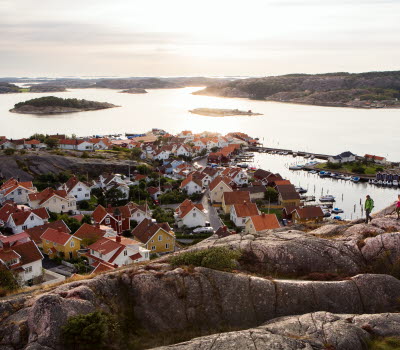
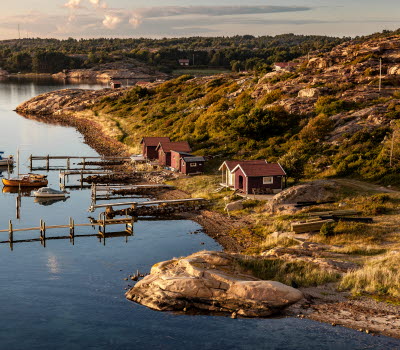
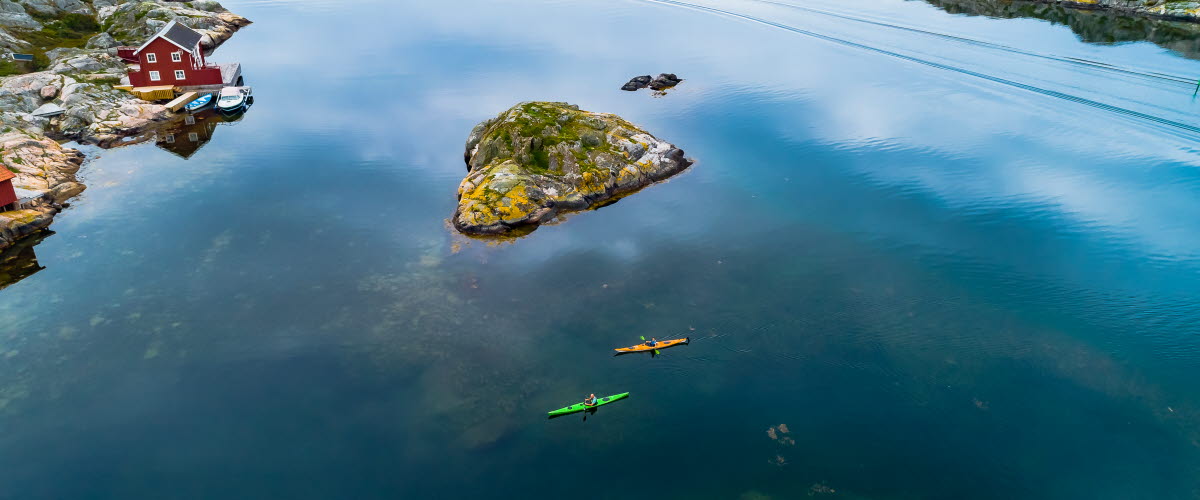
Kosterhavet National Park is the first national marine park of Sweden and was inaugurated in September 2009. It is located in Strömstad and Tanum municipalities in Bohuslän, Västra Götaland County, Sweden. It consists of the sea and shores around the Koster Islands, however excluding the islands themselves. We got to sit down with Martin Larsvik
one the head Marine Biologist at the park.
How long have you been working as a marine biologist? How long at this reserve?
I have been working as a marine biologist since 1991. In 1992 I started at the Lovén Centre Tjärnö, which is close to the Kosterhavet Marine National Park, inaugurated in 2009.
Can you describe the sea life around the park?
In the Kosterhavet Marine National Park there are about 6000 marine species. More than 200 of those have not been found elsewhere in Sweden, but can be found further west in the Atlantic Ocean. There are, for instance, large brown macroalgae (kelp), sponge animals, polychaete worms, crabs, starfish, sea cucumbers and fish. The most spectacular species is the eye coral (Lophelia pertusa), forming coral reefs at a depth of 85 meters.
I heard that the park doesn’t allow cars? Is that true? Is there protection from all sorts of pollutents?
Motor vehicles are only allowed on roads, but since there practically are no roads, we can say that the park doesn’t allow cars. But the park allow for motorboats, and there is no regulation of what kind of fuel the motorboats can use.
What are some of the most unique creatures you have come across?
There are several species which have been discovered by science in the area close to the Lovén Centre. One is a 9 mm long polychaete worm without mouth or gut.
What do you think about the oil spills off the coast of the US? How traumatic is that for sea life?
Considering the very large volume of oil that have been spilled, I think it is traumatic. Long-term effects of toxic compound of the oil accumulated in the food web, is believed to be more detrimental than the more easily seen short-term surface and shore effects.
Read the rest of this entry »
Posted by mike | Under Nature, Outdoors, Video
Wednesday Feb 17, 2010
We found this fantastic video of Kosterhavet Marine National Park by Knut Bergsten and it made us long for summer…
Posted by nick | Under Culture, Nature, Outdoors
Friday Jan 15, 2010

Natures Best
In line with Swedens attitude towards eco conservationism and the green movement, a national eco-tourism certification was created during the UN’s International Eco-Tourism Year 2002, identifying companies and activities that practice responsible tourism and eco-friendly tours.
Natures Best was created to help raise awareness of and promote eco-tourism in Sweden and has been designed to guarantee a high quality travel experience, in combination with an actively responsible attitude to protecting nature, a more environmentally friendly way to travel, and a caring attitude to the people and culture of the destination.
West Sweden has 8 experiences that have received Natures Best eco-certification, including sea kayaking, lobster safariing, and wool handling on local farms. Given the current need to keep our environment as sustainable as possible, Natures Best is a great way to enjoy your visit to West Sweden and keep your eco-footprint as small as possible. Check out more things great activities in West Sweden here or for a full list of the 124 Natures Best certified experiences in the whole of Sweden check out the Natures Best website.
Posted by mike | Under Food, Nature, Outdoors, Video
Tuesday Oct 6, 2009
The lobster fishing along the west coast of Sweden begins on the third monday in September every year. 7 AM the fishing starts and thousands of boats start searching for the black gold.
Posted by mike | Under Food, Nature, Outdoors
Friday Oct 2, 2009

Fall is upon us and that means swedes head out in droves to the forests with baskets to hunt for wild mushrooms. And perhaps the most exquisite of all is the chanterelle, the elusive golden mushroom. Head over to our friend Alison’s blog to read about her chanterelle hunt in West Sweden.
And for some extra culinary inspiration, you might be interested in a delicious recipe for Black Cod with Chanterelle Ragout.
Posted by nick | Under Cruise, Culture, Drink, Food, History, Nature, Outdoors
Sunday Sep 27, 2009

Göta Canal
What do you get when you cross the civil engineering project of the century, an ambitious government minister and a desire to evade Danish tariffs? Why the Göta Canal of course! It’s a one stop shop for tourists today, but when it was first built it was also a major trade route and the largest civil engineering project ever embarked upon in Swedish history.
Conceived of many centuries before it’s realization, the Göta Canal was begun in May of 1810 and was expected by Baltzar von Platen, the man in charge of the project, to become the major thoroughfare for goods and passangers throughout the region. After it’s 22 years of construction von Platen’s dream was acheived and throughout the 19th century served not just Sweden but all of Europe. Today however with planes, trains and automobiles, it has transformed into the biggest tourist attraction in West Sweden.
Stretching 190 kilometers and comprised of 58 locks, the Göta Canal passes through beautiful countryside, fantastic restaurants, and fascinating museums among other tourist beloved staples. You can cruise its waters, bike its shores, and even fish its inhabitants! More of the myriad activities along the canal can be found online here, along with accommodation and dining options, and historical info or you can peruse the online version of the Gota Canal Magazine filled with all the tourist info you could possibly require.
And just something to think about while you’re lounging lazily on the boat passing through the locks, that the structure you’re sailing took about 85 million (85,000,000) man-hours to make!

The opening of the Göte Canal in Mem 1832. Painting by K. Chr. Berger
Posted by mike | Under Nature, Outdoors
Wednesday Sep 23, 2009
We are happy to see that the UK media media has picked up on Kosterhavet, Sweden’s first marine national park around the Koster Islands. Head over to The Guardian and to The Independent to read more!
Posted by nick | Under Cruise, Culture, Food, Nature, Outdoors, Traditions
Tuesday Sep 15, 2009

Lobster Safariing in West Sweden
Have you ever wondered how a lobster went from being a happy lobster swimming along the bottom of the sea to a delicious lobster swimming along at the bottom of your pool of melted butter? The process is a fun one of baiting and setting lobster traps (or pots) to be hauled aboard later filled with lobsters whose next stop is another pot, this one however filled with boiling water rather than tempting bait.
They say meals are much more satisfying when you have to work for them, and in West Sweden you can do just that – go on a lobster safari to catch your own delectable delicacies. No need to wonder about where your dinner came from, since you picked it out fresh from the sea yourself and helped prepare your meal.
The first Monday after September 20th every year, (the 21st this year) marks the beginning of lobster season when every diner young and old in West Sweden celebrates with a seafood feast honoring of course the star of the season Nephropidae. The lobster safaris help everyone enjoy the festivities and partake in the excitement – allowing locals, tourists, grandkids and grandparents to master a unique skill through an unquotidien experience.
Here is a list of many of the companies that offer a variety of packages from relaxing spas with a lobster feast to full on day of lobster fishing.


Posted by nick | Under Culture, General, Nature, Outdoors, Traditions
Thursday Sep 3, 2009

Kosterhavets opens this September
Sustainability meets biodiversity at Kosterhavet, Sweden’s first marine national park opening this month off the Bohuslan coast near Stromstad. It’s always great when new environmental protections are established, but often they come at the cost of local and sometimes national industrial objections. Kosterhavet actually occupies one of the most important fishing grounds in the region for prawns, lobsters, crabs, and shellfish, and has also set into place rules and regulations to preserve the industry in the national park. In line with the trendy, but nonetheless important green movement, Kosterhavet will allow sustainable fishing practices, combining industry and nature in a model that would be wonderful if we could expand and apply to more of the planets resources.
Humans have always held a fascination for the sea and it’s utterly foreign environment, largely because it’s so mysterious. Kosterhavet, will cover 450 square kilometers of the richest and most diverse seascape in Sweden with over 6000 different species 200+ of which exist nowhere else. The Koster-Väderö Fjord, located within the park runs to the Atlantic ocean and brings a high salinity to the waters driving evolution to develop unique creatures. The park will help draw tourism to explore this unique environment whilst preserving the marine environment and the traditional fishing industry.
Posted by nick | Under Cruise, Nature, Outdoors
Thursday Aug 20, 2009
So sadly, Way Out West is over, and now arises the questions: “Here I am in Sweden, what can I do?” Although it’s not the tropical turquoise waters and white sand beach island hopping, Bohuslän has a wealth of natural beauty and fabulous cuisine. Bohuslän is a rocky coastal region of Sweden with an archipelago of over 3,000 islands, comprising the the northern portion of the Gothenburg Archipelago.
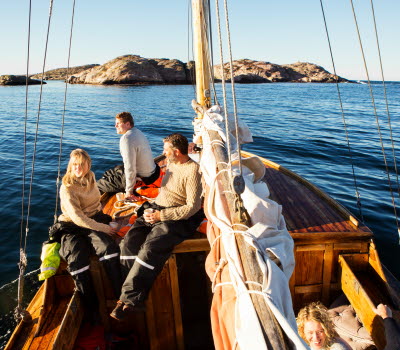
Skipping from island to island affords visitors stunning vistas and fun activities, including dips in the sea, fishing boat trips, diving, miniature golf, and visiting the uniquely fascinating Nordens Ark – a not-for-profit organization helping to save endangered species. The region also boasts some of the freshest shellfish and seafood you can find, going from sea to stomach in mere minutes!
Here is a link to a map of the ferry lines where you can find out more about some of the bigger island stops and their gastronomic and leisure offerings by clicking on them. It’s a unique way to enjoy the region and explore a beautiful ecosystem that is often ignored in favor or the more tropical island chains of the world.